Every few months Singapore goes through a round of it: half the office coughing, the kids’ school sending a hand-foot-and-mouth notice, and the person next to you on the bus sneezing into the air-con. The question we get most at that point is some version of “which juice should I drink so I don’t catch it?” The honest answer is that no juice is a vaccine. But what you eat and drink does change how well your immune system does its job, and there are specific ingredients with real evidence behind them. This is a guide to those, and to how we use them in our juices.
What “boosting immunity” actually means
Your immune system is not a dial you turn up. It is a set of processes that need raw materials: vitamin C for white blood cells and the lining of your airways, vitamin A for the mucous membranes that are your first barrier, zinc for the enzymes that fight infection, and a healthy gut, where roughly 70% of your immune cells live. When you are short on any of these, the system runs below capacity. “Boosting” in any useful sense means closing those gaps, lowering the background inflammation that distracts the system, and sleeping enough that it can do its work. Juice helps with the first two. Nothing in a bottle helps with the third.
The ingredients that matter, ranked by evidence
1. Vitamin C from citrus
The most studied immune nutrient. It does not prevent colds in most people, but regular intake shortens their duration and severity, and the effect is stronger in people under physical stress. Oranges, lemons, limes and grapefruit are the obvious sources; one orange gives you most of a day’s requirement. Because vitamin C is water-soluble and your body does not store it, a daily source beats a mega-dose when you are already sick.
2. Ginger
Fresh ginger contains gingerols, compounds with measurable anti-inflammatory and antimicrobial activity in lab and animal studies, and a long track record for settling nausea and easing sore throats. It is also simply pleasant when you are unwell. We press it raw, which keeps the gingerols that cooking reduces.
3. Turmeric, with black pepper or fat
Curcumin, the active compound in turmeric, is one of the better-researched anti-inflammatory plant compounds. The catch is that it is poorly absorbed on its own. Piperine from black pepper raises absorption many times over, which is why you will see cayenne or pepper in serious turmeric drinks and why “golden milk” uses coconut milk.
4. Beta-carotene from carrots, beetroot and leafy greens
Your body converts beta-carotene to vitamin A, which maintains the lining of your nose, throat and gut. Those linings are where most infections try to get in. Carrots, sweet potato, dark leafy greens and red or orange fruit are the sources.
5. Garlic
Allicin, released when garlic is crushed, has antimicrobial activity in the lab and modest evidence for fewer colds in trials. We do not put it in juice because nobody would drink it, but it earns a mention because it works and it is in your kitchen.
6. Prebiotic fibre and fermented foods for the gut
This is the one most juice brands skip because juice removes fibre. It matters anyway: the bacteria in your gut train and regulate your immune cells. Cold-pressed juice still delivers polyphenols that feed good bacteria, but if you are drinking juice for immunity, eat your vegetables and some yoghurt, tempeh or kimchi as well. We say this on every cleanse page too.
What does not hold up
Echinacea, “immune shots” that are mostly sugar, and anything promising to “flush viruses”. Also: more vitamin C is not better past about 200mg a day; the excess leaves in your urine.
How we put this into a bottle
We built the Immunity Juice Pack around the first four items on that list, in three juices that cover a day:
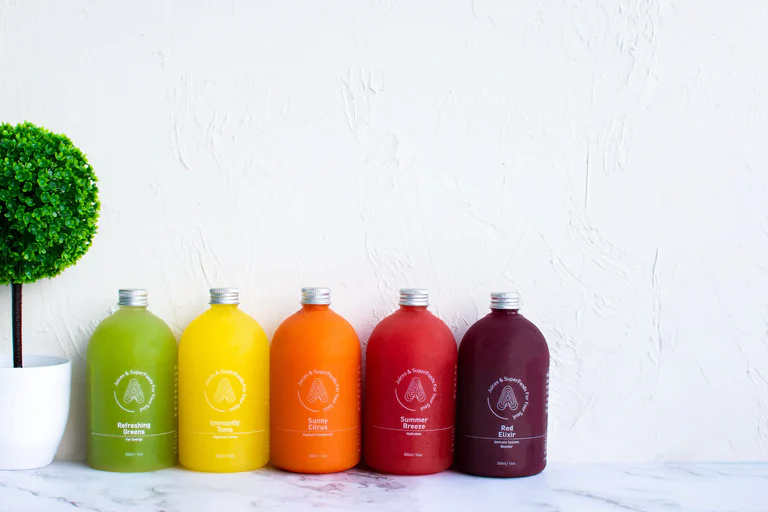
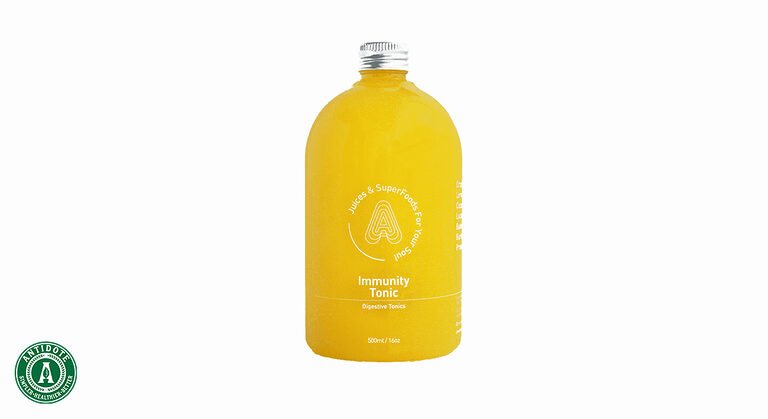
- Immunity Tonic: orange, lemon and coconut water. This is the vitamin C and hydration juice, bright and simple, the one to start the day with when you feel something coming on.
- Red Elixir: watermelon, beetroot, green apple, lemon, ginger, turmeric, cayenne, celery and mint. Beta-carotene and nitrates from beetroot, gingerols, and curcumin with the cayenne that helps you absorb it. This is the serious one.
- Green Electrolytes: coconut water, green apple, lemon, spinach, cucumber, mint and parsley. Folate and polyphenols from the greens, plus the potassium and fluid you lose when you are running a temperature. Hydration is half of recovery.
The pack is three 500ml bottles for S$50 before the site-wide 20% off, which works out to S$13.33 a bottle after discount, against S$13.60 for the same juices bought singly. Each bottle is pressed the day before delivery and never pasteurised or heat-treated, which is the point: heat is what destroys vitamin C and the volatile compounds in ginger. A four-day shelf life is the price of that.
A practical “everyone around me is sick” routine
This is what we would actually do, juice included but not juice alone:
- Morning: one citrus juice or a real orange. Not both, not three. Daily, not in a panic when symptoms start.
- Lunch: something with actual vegetables and a fermented side. Hawker food can do this: yong tau foo with extra greens, or economic rice with two vegetable dishes.
- Afternoon: a ginger-turmeric juice if you can, or ginger tea if you cannot. Skip the sugary immunity shots.
- Evening: eat early, sleep seven hours. Sleep deprivation suppresses immune function faster than any food fixes it.
- Already sick: fluids, rest, and food you can keep down. A juice day is fine, a cleanse is not; your body needs calories to fight.
Frequently asked questions
Which juice is best for immunity?
One that combines citrus for vitamin C with ginger or turmeric for anti-inflammatory compounds, and is not heat-treated. Orange and ginger is the classic for a reason.
Can I drink immunity juice every day?
Yes, and a daily habit works better than a one-off. Watch sugar if you are drinking fruit-only juices daily; blends with vegetables keep it lower.
Does cold-pressed juice really have more vitamin C than normal juice?
Fresh cold-pressed juice is not heated, so vitamin C is not lost to pasteurisation. The difference against bottled supermarket juice is meaningful; the difference against fresh-squeezed at a hawker stall is small, as long as you drink it quickly.
Is a juice cleanse good when I am sick?
No. Wait until you are better. A cleanse is a reset for a healthy body, not a treatment. If you want to rebuild after a bug, the Immunity Juice Pack alongside normal meals makes more sense. See when to cleanse and when not to.
The Immunity Juice Pack and single bottles are available with free islandwide delivery over S$60. Order by 10.30pm for next-day delivery. For an office or a family, the full cold-pressed range can be mixed into any box.