“Detox juice for weight loss” is one of the most searched phrases in Singapore’s health space, and most of what ranks for it is either a miracle claim or a lecture about how juice is just sugar. Both are lazy. We have sold juice cleanses here since 2015, we have watched tens of thousands of customers use them, and we would rather tell you exactly what juice can and cannot do for your weight, so that if you buy from us it is for the right reasons.
First, the uncomfortable part
Juice does not burn fat. Nothing you drink burns fat. Weight loss comes from eating fewer calories than you use over weeks, and no ingredient in a bottle changes that arithmetic by more than a rounding error. “Detox” is also not a thing your liver outsources to a juice; your liver and kidneys detoxify you continuously whether you drink green juice or kopi. If a brand tells you otherwise, keep your money.
What juice can do is make the arithmetic easier for a few days, break a pattern you are stuck in, and reset what your palate expects. That is less exciting and far more useful.
How a juice cleanse actually produces weight loss
A day on our Skinny Cleanse is six 500ml bottles and roughly 1,000 calories, with almost no sodium and no processed food. Three things happen:
- A calorie deficit. If you normally eat 2,200 calories, a cleanse day is roughly a 1,200 calorie deficit. Three days is roughly 3,500 calories, which is about half a kilogram of actual fat. That is real, and it is modest.
- Water and bloat drop. Low sodium plus no refined carbohydrate means your body releases retained water and your gut empties. This is the 1 to 2kg most people see on the scale by day three. It is not fat, it will partly return when you eat normally, and that is fine. The flatter stomach and the “lighter” feeling customers describe is this.
- A pattern break. This is the part that produces lasting results for some people and nothing for others. Three days without bubble tea, late-night snacks or dessert resets your sense of what sweet tastes like and what full feels like. If you use that reset to change the week after, the cleanse was worth it. If you go back to the same habits on day four, you have lost half a kilogram of fat and some water for a few days of effort. Still fine, but know which one you are buying.
Which juices are better for weight loss, and why
Not all juice is equal here. Ranked by how they fit a weight-loss goal:
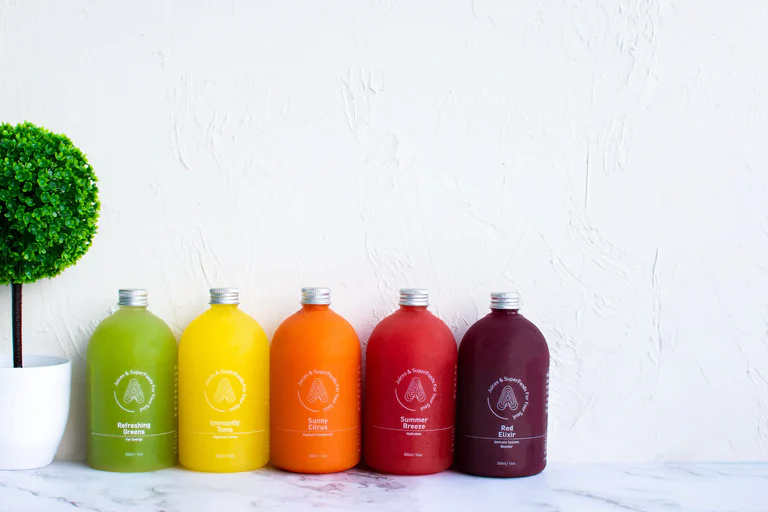
- Vegetable-forward green juices. Lowest in sugar and calories, highest in potassium and chlorophyll, most filling per calorie. Celery, cucumber, romaine, spinach and parsley with just enough apple or lemon to make them drinkable. These should be most of a weight-loss cleanse. Ours: Living Greens, Sweet Greens, Green Electrolytes.
- Citrus and grapefruit with ginger. Lower in sugar than tropical fruit, and grapefruit, ginger and lemon have a long association with appetite control. The evidence for a metabolic effect is weak; the evidence that people find them satisfying and drink less of other things is strong. Ours: Earthy Electrolytes.
- Root and beet juices. Moderate sugar, high in nitrates and antioxidants. Good as the one “sweeter” juice in a day.
- Fruit-only juices. Orange, pineapple, watermelon, mango. Delicious, and effectively a sugar drink with vitamins. They have a place as a treat; they do not belong in a weight-loss plan as a daily habit.
- Nut mylks. Higher in calories and fat, but they are what keeps you from quitting a cleanse at 9pm. One a day is sensible; our cleanse menus include one for that reason, usually first thing so you are not hungry by mid-morning.
Juice versus smoothies versus eating the vegetables
If the goal is purely weight loss, eating the vegetables whole beats blending them, which beats juicing them, because fibre fills you up and slows sugar absorption. We make juice, and we still say this. Juice earns its place in two cases: when you will not actually eat a kilogram of vegetables a day (almost everyone), and when you want the low-calorie, no-decision structure of a cleanse for a few days. Smoothies are a good everyday middle ground, and a worse cleanse, because the fibre makes them heavy.
A realistic plan that uses juice properly
This is what works for the customers who come back lighter six months later, not just three days later:
- Pick a start date with a quiet weekend. Friday to Sunday is the usual choice. Avoid weeks with a wedding dinner or a work trip.
- Ease in for two days. Cut alcohol, fried food and sugary drinks before you start. It makes day one far easier and reduces the headache some people get.
- Do a 3-day cleanse, not a 7-day one. Three days gets the full water-and-bloat effect and the palate reset. Beyond five days, you start losing muscle rather than fat, and the hunger makes rebound eating more likely. Our 1, 3 and 5-day options are on the juice cleanse page.
- Break it gently. Day four is vegetables, fruit, soup and a small portion of protein. Not a buffet. The first meal after a cleanse sets the tone for the week.
- Keep one habit. Whatever you missed least during the cleanse (for most people it is the sugary drink), leave it out going forward. That single change is worth more than the cleanse itself.
- Repeat monthly, not weekly. A cleanse every four to six weeks is a reset. A cleanse every week is a crash diet with better branding.
Who should not do this
Anyone pregnant or breastfeeding, anyone with diabetes or on blood-sugar medication, anyone with an eating disorder history, and anyone under 18. If you have a medical condition, ask your doctor first. A juice cleanse is a short reset for a healthy adult, not a treatment.
Frequently asked questions
How much weight can you lose on a 3-day juice cleanse?
Typically 1 to 2.5kg on the scale, of which roughly 0.5kg is fat and the rest is water and gut contents. The water portion returns when you resume eating; the fat loss stays if your eating afterwards is sensible.
Which detox juice is best for belly fat?
None of them target belly fat specifically; fat loss is whole-body. The flatter stomach people see is reduced bloating from low sodium and no processed food, which green juices do best.
Can I exercise during a juice cleanse?
Light exercise, yes. Walking, yoga, easy cycling. Skip heavy lifting and long runs, since you are on under half your usual calories. We cover this in exercising safely on a juice cleanse.
Is one juice a day enough to lose weight?
Replacing a sugary drink or a snack with a green juice every day creates a small daily deficit and a better habit; that adds up. Adding a juice on top of what you already eat does the opposite.
If you want the structured version, the Skinny Cleanse is our lowest-calorie menu and the one most customers choose for weight loss. It starts at S$84 a day before the site-wide 20% off, with free islandwide delivery and a 10.30pm cutoff for next-day delivery.